
Comprehensive Caregiving Home Safety Evaluation
What goes into a home-safety assessment? Learn how a comprehensive caregiving home safety evaluation can help prevent accidents, reduce stress, and create a safer, more supportive space for your loved one.
This content is based on personal experience and general information, not medical advice. Every situation is different, so please consult your healthcare provider or care team for guidance specific to your needs.
Nearly one in three older adults falls each year in the United States — a quiet fact that reshapes how we live and love under one roof.
You carry so much already. The daily work of tending to someone you love deserves a place that supports them and restores dignity.
I learned over the years that care giving is not just about medications, appointments, or being available when something goes wrong. It is also about seeing a home differently. After walking through three very different care giving chapters in my life, I began to understand how much safety lives in the small things—what is within reach, what could cause a fall, what adds comfort, and what quietly creates peace of mind. A home safety evaluation may sound practical on the surface, but to me it is also an act of love. It says, “I want this space to support you, not work against you.”
Creating that sanctuary begins with careful attention to the home and its risks. Small changes—better lighting, grab rails, clearer paths—add up. Each step preserves independence.
Organizations like Rebuilding Together offer practical help. For a deeper guide to practical steps and professional reviews, see this home safety resource.
Main Points to Remember
Simple home changes can cut fall risk and preserve independence.
Respectful, dignity-focused planning makes daily life safer and kinder.
Use trusted groups like Rebuilding Together for practical support.
This checklist-style approach turns small acts into lasting safety.
Better home design reduces stress for you and your loved one.
Creating a safer home is only one part of the bigger picture. For a broader look at what caring for a loved one at home can really involve, read Providing Home Care for a Family Member: What to Know.
Understanding What Goes Into a Caregiving Home-Safety Assessment
Walk through the rooms as if your loved one moves more slowly and sees differently. Pause. Notice rugs, thresholds, dim corners, and furniture that crowds a path.
Focus on hazards that turn routine steps into risk: loose rugs, poor lighting, cluttered walkways, slick floors. The CDC notes millions of older adults fall each year and many need emergency care. This is not abstract. It is urgent.
Use a clear checklist to keep time and tasks organized. A shortlist helps you record hazards room by room. It saves mental energy while you juggle daily care.
Safety is more than accident prevention. It is making the home accessible, calm, and kind. Small fixes—brighter bulbs, secure rugs, grab rails—restore confidence.
See rooms through changing ability.
Note hazards, then prioritize fixes.
Use a checklist to track progress and time.
Room-by-Room Safety Evaluation Checklist
Start by scanning each room for the small things that trip up balance and sight. Move slowly. Note low light, loose rugs, narrow doors, and cluttered paths.
Bathroom and Kitchen Essentials
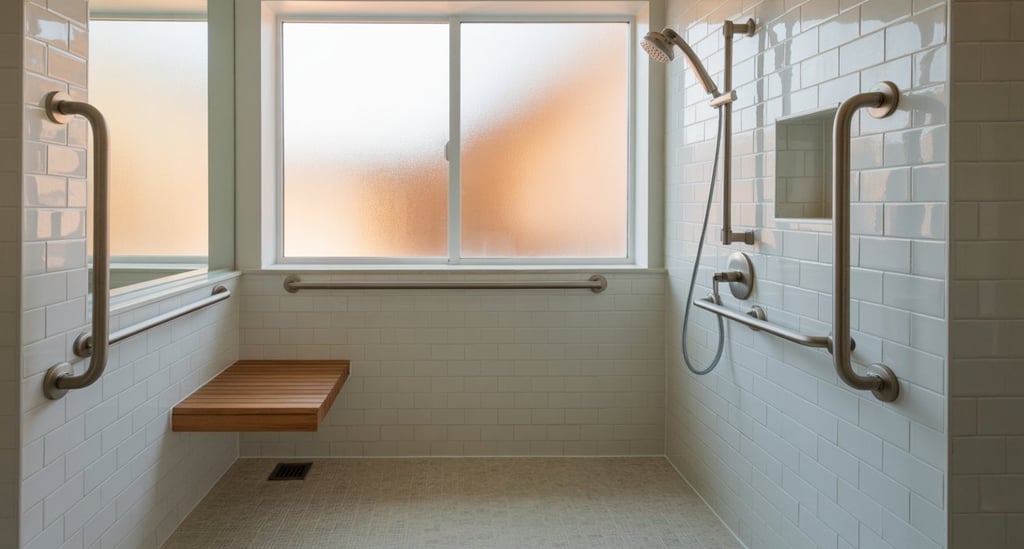
In the bathroom, install secure grab bars near the toilet, tub, and shower. Add a non-slip surface in the shower and near the tub to reduce fall risk.
In the kitchen, check stove controls and use knob covers if needed. Keep shelves at reachable height and clear the floor of spills and rugs that become hazards.
Bedroom and Living Area Modifications
Place a phone near bed and ensure night lights and switches are easy to reach. Stable furniture helps when moving from sitting to standing.
Leave clear walking space. Widen any door to at least 32 inches to improve access for walkers or wheelchairs.
Exterior Entrances and Stairways
Make sure entrances and stairs are well-lit. Install handrails on both sides of stair runs and use non-slip surfaces on steps.
Check locks and door hardware for easy use. Use this checklist to inspect every room and keep living areas free from tripping hazards.
Checklist: lights, switches, rugs, grab bars.
Access: 32-inch doors and clear space for mobility aids.
Safety: handrails, non-slip surfaces, reachable shelves.
Adapting the Environment for Cognitive and Physical Needs
A thoughtful shift in lighting, storage, and layout rewrites how someone moves through the home.
Small rules, big relief. Bright, consistent lighting in hallways and rooms helps vision and reduces confusion. Place night lights along routes from the bedroom to the bathroom.
For memory and safety, store medications in a locked cabinet and use a pill box to keep doses clear and consistent.
Managing Medication and Emergency Preparedness
Keep an emergency list of local police and fire departments near the phone. Test smoke and carbon monoxide detectors twice a year—replace batteries during daylight saving time.
Kitchen safety: use appliances with automatic shut-off and remove stove knobs when not in use.
Bathroom access: install grab bars near the toilet and tub, and make the shower non-slip and reachable.
Home layout: secure tall furniture to walls and keep closet shelves at reachable height to avoid climbing.
These shifts protect body and mind. They make the home steadier, kinder, and easier to move through.
When to Consult a Professional Occupational Therapist
When daily movement becomes uncertain, an occupational therapist can translate worry into practical fixes. Jacqueline Green, OTR/L, brings 13 years of experience in inpatient rehab and home health. She specializes in making the home match real human needs.
If you notice changes in balance, vision, or walking, call a therapist. They evaluate the person and the space. They spot hazards that family members might miss.
An expert watches how someone moves through each room. They check lighting, door swings, stairs, and access points. They measure heights of counters and the placement of the bed and phone.
Benefits: tailored recommendations, fewer falls, and better independence. A professional plan can prevent a fall before it happens and give you peace of mind.
"A trained therapist turns small changes into lasting freedom."
Personalized fixes for mobility and vision
Room-by-room analysis of real hazards
Optimized heights and clear access for daily living
Conclusion: Prioritizing Safety for Long-Term Independence
Every careful adjustment—light, rail, or knob—adds up to lasting peace, and each one protects movement and dignity within the home.
Follow the checklist. Keep lights bright, install grab bars in the bathroom and near the toilet, secure rugs with non-slip strips, and set water heater height to 120 degrees. These steps reduce falls and steady daily life.
Stay mindful of door clearances, reachable shelves, and kitchen appliances. Test smoke detectors and keep an emergency phone list near the bed. Small, steady work protects big freedoms. You are doing vital work. Hold on to that peace.